Blog

A Parent’s Guide to Kids Dental Emergencies in Hallandale Beach

A Parent’s Guide to Kids Dental Emergencies in Hallandale Beach

Kids’ dental emergencies rarely happen at a convenient hour. A scooter spill at the park, a hard bite on an ice cube, a toothache that starts at 11 p.m. What you do in the first 30 minutes often decides whether a tooth survives.  This guide gives you the exact steps for each situation and tells you when to call a kids emergency dentist.  Key Takeaways Act within 30 minutes for a knocked-out permanent tooth. Pick it up by the crown, rinse it gently, and store it in milk. The faster it gets back in the socket, the better the odds. Never put a knocked-out baby tooth back. Replanting it can damage the permanent tooth forming underneath. Control the bleeding and call your pediatric dentist. Treat facial swelling as urgent. Swelling around the eye, jaw, or neck, plus fever, means infection is spreading. Call the same day or go to the ER. Dental injuries are common. A meta-analysis of studies worldwide put the prevalence of traumatic dental injuries in children and adolescents at about 17.5 percent, with falls as the leading cause and home as the most frequent location. Save the number before you need it. Save your pediatric dentist’s number
Dental Visits for Children with Autism A Parent Guide

Dental Visits for Children with Autism: A Parent Guide

Dental visits for children with autism take more planning than a standard checkup. Bright lights, high-pitched tools, unfamiliar textures, and a stranger reaching toward the mouth combine into a lot of sensory input at once. The good news is that specific, tested adjustments make these appointments work. This guide covers what to ask for and how to prepare.   Key Takeaways Oral health risk runs higher. Pooled research puts dental caries prevalence among autistic individuals at 60.6 percent and periodontal disease at 69.4 percent, so prevention matters more, not less. Sensory adaptations have real evidence behind them. A randomized crossover trial of 162 autistic children found significantly lower physiological stress in a sensory-adapted dental environment across every phase of the visit. Ask for a desensitization visit first. A no-treatment appointment lets your child meet the room, the chair, and the team with no expectations.  Bring your child’s sensory profile in writing. Tell the office which sounds, lights, textures, and tastes cause trouble before you arrive. Use wait time when you communicate. The 6-second rule means asking once, then pausing quietly so your child can process and respond. Keep sedation as a clinical decision. Most visits succeed with behavioral and sensory supports,

My Child Is Terrified of the Dentist: What Should I Do

My Child Is Terrified of the Dentist: What Should I Do?

If you think your child is terrified of the dentist, you are in good company. Research puts dental fear and anxiety at roughly 30 percent among children ages 2 to 6. Fear at this age responds well to the right approach. This guide explains what drives the fear and gives you specific steps you can use starting today.  Key Takeaways Dental fear is common and treatable. About 30 percent of children ages 2 to 6 show dental fear and anxiety, and rates drop to around 13 percent by adolescence. Book the first visit early. Children with no prior dental visit have higher odds of developing fear. An easy checkup at age 1 builds familiarity before any treatment is needed. Change how you talk about it. Skip words like shot, drill, and pain. Use short, neutral language and let the dental team introduce their own vocabulary. Schedule mornings. Book appointments after a full night of sleep and a light meal, when your child has the most emotional reserve. Ask about behavior guidance before sedation. Tell them that distraction and nitrous oxide resolve most cases without deeper sedation. Verify sedation safety standards. National guidelines call for at least two specifically trained people

My Child Hurt a Tooth What to Do Right Now

My Child Hurt a Tooth: What to Do Right Now

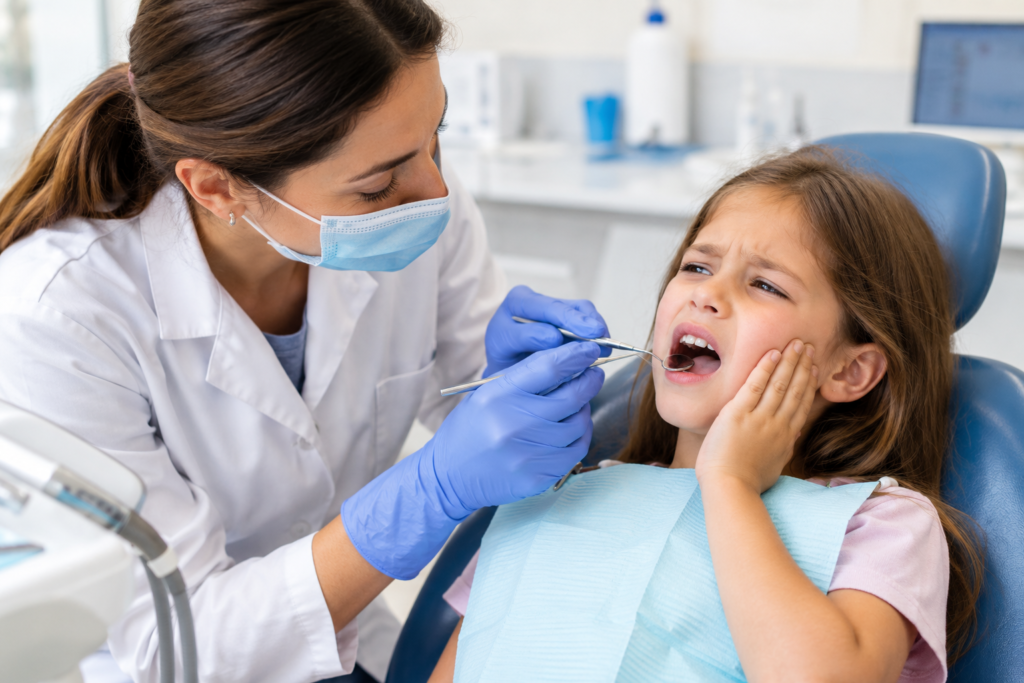
My child hurt a tooth. That thought can send any parent into a panic. A fall, a bump, or a bite into something hard can turn a calm afternoon into a scramble. You need clear steps, and you need them fast. This guide walks you through what to do in the first minutes, how to ease the pain, and when to call a dentist.  Key Takeaways Act within the hour. A knocked-out permanent tooth has the best chance of survival if you place it back within 15 minutes, up to about one hour. Know the tooth type. Never push a baby tooth back in. Reinsert only permanent teeth. Handle by the crown. Pick up a knocked-out tooth by the white top. Store it in milk if you cannot put it back. Ease pain at home. Rinse with warm salt water, apply a cold compress, and give an age-appropriate dose of children’s pain reliever. Skip aspirin. Never give aspirin to a child or place it on the gums. Call fast. Book an emergency dentist visit for heavy bleeding, swelling, fever, or a loose or pushed tooth. What Should You Do First When Your Child Hurts a Tooth? When your child hurts

Zirconia vs. Stainless Steel Crowns for Kids

Zirconia vs. Stainless Steel Crowns for Kids: A Guide

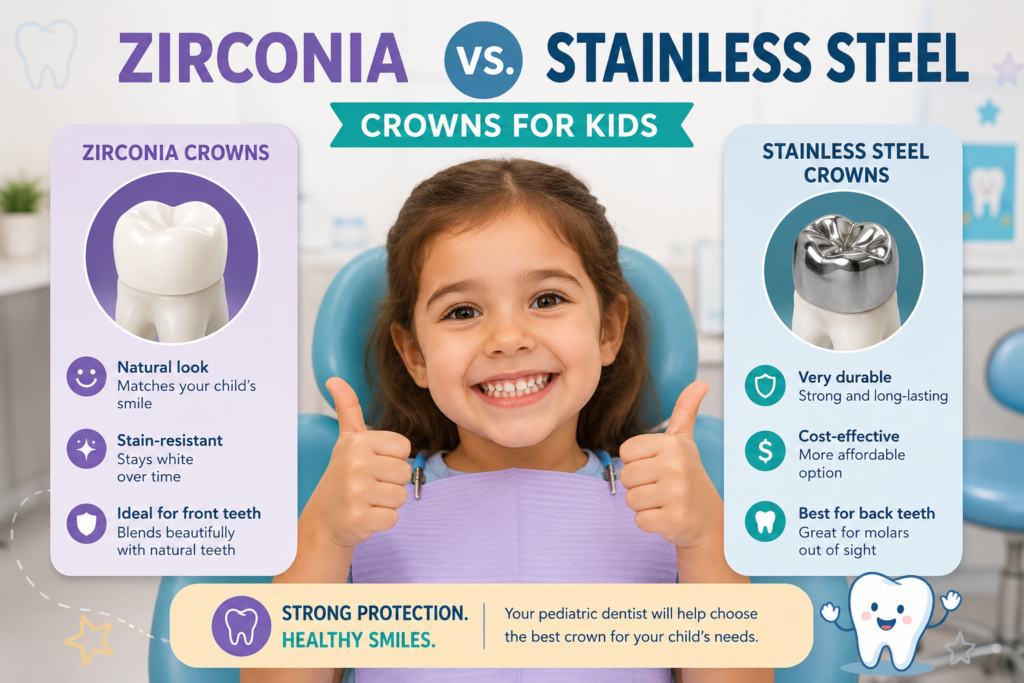
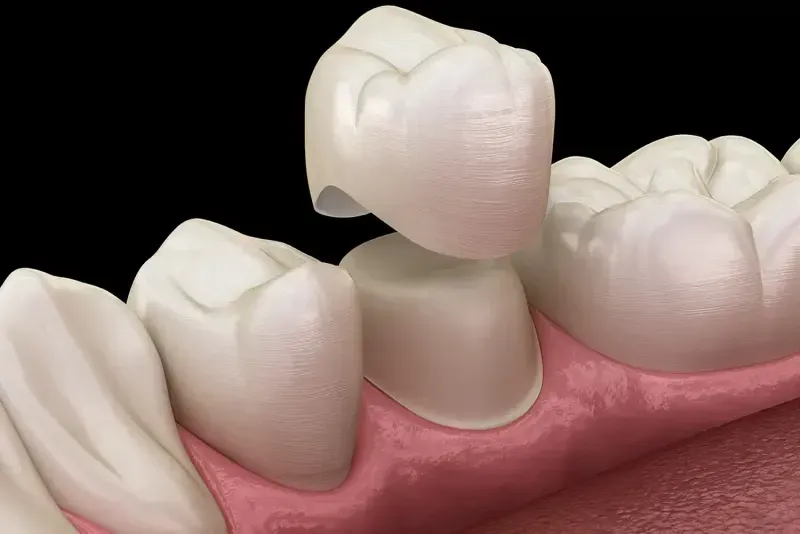
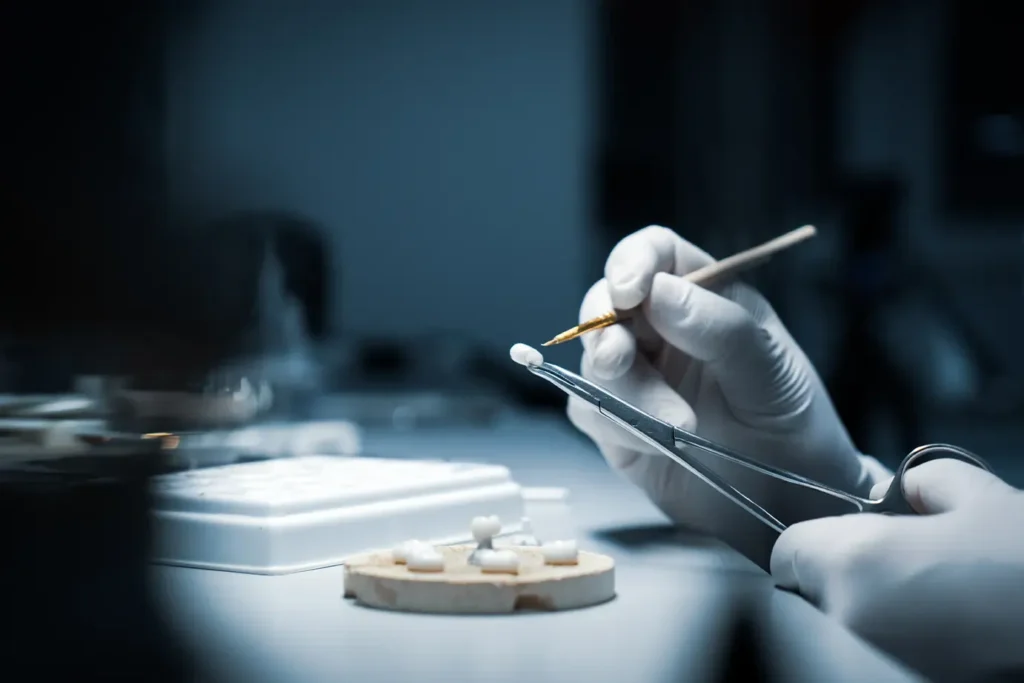
Your child needs a crown, and your dentist gave you a choice. The decision between Zirconia vs. Stainless Steel Crowns comes down to four things: looks, strength, cost, and safety. Both protect a damaged baby tooth until it falls out. This guide breaks down each option in plain terms so you can choose with confidence.       Key Takeaways Zirconia wins on looks. These crowns are tooth-colored and blend in, making them the top pick for front teeth. Stainless steel wins on strength. One study found a 98% retention rate for steel crowns versus 92% for zirconia over 12 months. Steel costs less. Steel crowns run $300 to $900 per tooth. Zirconia crowns run $500 to $1,000. Both are safe. The main caution is nickel allergy, and zirconia is fully metal-free for kids with that allergy. Tooth prep differs. Zirconia needs more tooth reduction, while steel needs very little. Your dentist matches the crown to the tooth. The right choice depends on the tooth location, your child, and your budget. Still, the most common crown is a posterior zirconia crown.    Which Is Better, Zirconia or Stainless Steel Crowns? Neither crown is better in every case. The best crown depends on the tooth

Pediatric Zirconia Crowns Cost in Hallandale Beach, FL

Pediatric Zirconia Crowns Cost in Hallandale Beach – The Complete Guide

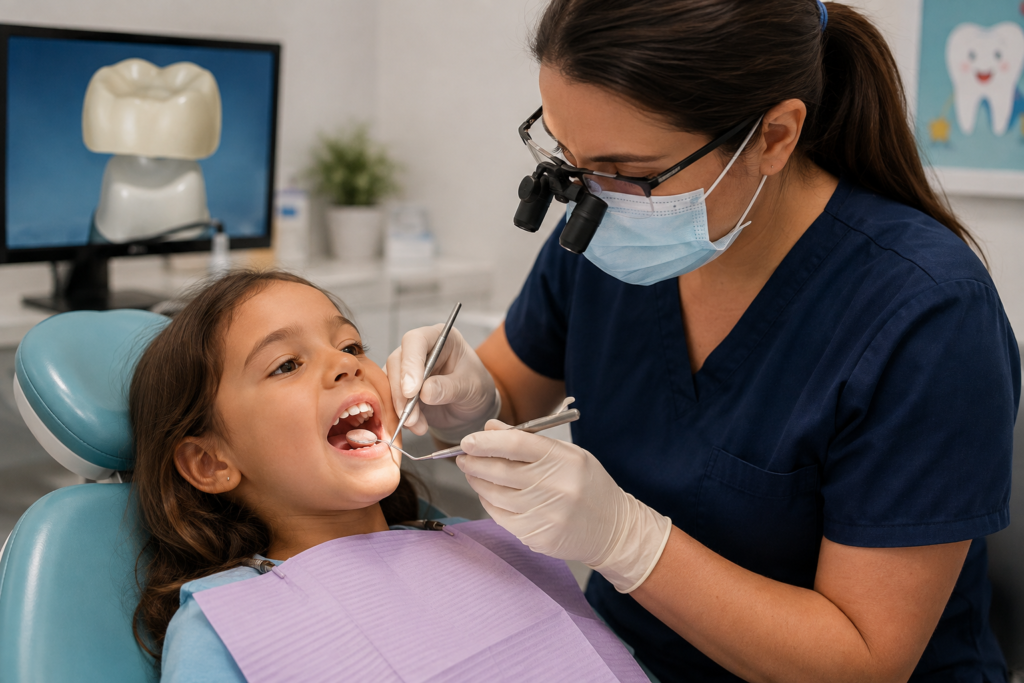
Your child needs a crown, and your first question is about the cost. Pediatric zirconia crowns cost about $500 to $1,000 per tooth in Hallandale Beach, and sometimes more. This guide breaks down the price range, what changes it, and how insurance fits in, so you can plan with confidence.    Key Takeaways Expect $500 to $1,000 per tooth. Pediatric zirconia crowns in the Hallandale Beach area usually land in this range, with complex cases reaching $1,500. Zirconia costs more than stainless steel. Steel crowns run $300 to $900. You pay extra for the natural, tooth colored look. Insurance often covers about half. Many plans pay roughly 50% for medically needed crowns, though some treat zirconia as an aesthetic upgrade. The tooth location changes the price. Front teeth and molars carry different fees based on appearance and chewing strength. Ask for a written estimate first. A clear quote with the CDT code and your plan details prevents surprise bills. Treating decay early saves money. A crown now costs far less than an extraction plus a space maintainer later. How Much Do Pediatric Zirconia Crowns Cost in Hallandale Beach?  The cost of pediatric zirconia crowns in Hallandale Beach ranges from $500 to