Your child’s dentist found a cavity, and your first thought is simple: that tooth will fall out anyway, so why fix it? Parents ask this question about baby teeth cavities all the time.
The short answer is yes. Most cavities in baby teeth need treatment. Your child depends on those teeth for years, and decay spreads fast. Here’s what you need to know.
Key Takeaways
- Baby teeth stay for years. Back molars usually stay until age 10 to 12, so a cavity there can cause problems for a long time.
- Cavities are common. About 1 in 10 children ages 2 to 5 and nearly 1 in 5 children ages 6 to 8 have untreated decay in their baby teeth.
- Waiting makes treatment bigger. A small cavity that needs a simple filling today can need a crown, pulp therapy, or an extraction later.
- Untreated decay affects daily life. Pain and infection can disrupt eating, sleep, speech, and school.
- Your child has options. Treatments range from fluoride and silver diamine fluoride to fillings and crowns, based on cavity size and your child’s age.
- Prevention works. Brushing with fluoride toothpaste, limiting sugary drinks, and checkups every 6 months lower your child’s risk.
Why Do Baby Teeth Cavities Need Treatment If the Teeth Fall Out Anyway?
Baby teeth help your child chew, speak clearly, and smile with confidence. They also hold space for the adult teeth growing underneath.
When a baby tooth cavity goes untreated, it can affect all three jobs at once.
Baby Molars Stay in Place Until Age 10 to 12
Front teeth usually fall out around ages 6 to 8. The back molars stay much longer. According to the American Dental Association’s eruption chart, baby second molars usually fall out between ages 10 and 12.
That means a cavity in a baby tooth molar at age 4 can stay in your child’s mouth for 6 to 8 more years. That gives decay plenty of time to reach the nerve.
Decay Spreads Faster in Baby Teeth
Baby teeth have thinner enamel than adult teeth. Their nerves also sit closer to the surface. As a result, a small cavity can become deep within months.
Healthy Baby Teeth Guide Adult Teeth Into Place
Each baby tooth saves a spot for the adult tooth below it. If your child loses a tooth early, nearby teeth can drift into the gap and cause crowding later.
How Common Are Cavities in Baby Teeth?
Cavities in baby teeth are common. The CDC’s 2024 Oral Health Surveillance Report shows how often they show up at different ages.
| Age Group | What the CDC Found |
|---|---|
| 2 to 5 years | About 11% have at least one untreated cavity in a baby tooth |
| 6 to 8 years | Nearly 18% have at least one untreated cavity in a baby tooth |
| 6 to 9 years | Half have had a cavity in a baby or adult tooth |
What Happens If You Leave Cavities Untreated on Baby Teeth?
Once a cavity breaks through the enamel, the tooth can’t repair itself. Bacteria keep moving deeper into the tooth.
Here’s what can happen when you wait:
- Toothache: Pain often starts once decay reaches the inner layer.
- Infection and abscess: Bacteria can reach the nerve and cause swelling, fever, or a pimple on the gums.
- Spread to other teeth: Decay-causing bacteria can affect neighboring teeth.
- Damage to the adult tooth: An infection near the root can harm the adult tooth forming underneath.
- Early tooth loss: A badly damaged tooth may need extraction, which can cause spacing problems.
- Trouble at school: CDC research links poor oral health to more missed school days and lower grades.
Is It Okay to Leave a Cavity Untreated for 2 Years?
For most children, no. Two years gives decay enough time to reach the nerve, especially in a baby molar.
There is one exception. If the tooth will fall out within a few months and the cavity is small, your dentist may suggest monitoring it. Your dentist then checks it at every visit.
How to Treat Cavities in Baby Teeth
Baby teeth cavity treatment depends on how deep the decay goes, your child’s age, and how long the tooth needs to last.
Fluoride Varnish for Early Spots
Early decay often shows up as a white, chalky spot. At this stage, fluoride varnish can strengthen the enamel and stop the spot from turning into a cavity.
Silver Diamine Fluoride (SDF)
SDF is a liquid your dentist brushes onto the cavity. It stops decay without drilling or numbing. The American Academy of Pediatric Dentistry conditionally recommends 38% SDF to stop cavities in baby teeth as part of a full care plan.
The trade-off is color. SDF turns the decayed area black. Many parents accept this on back teeth.
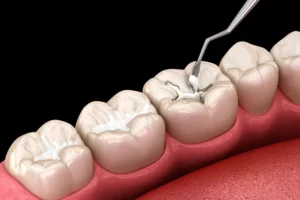
Pediatric Cavity Filling
A filling is the most common fix for small to medium cavities. Your dentist numbs the area, removes the decay, and fills the space with tooth-colored material.
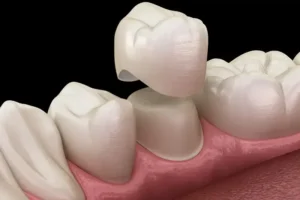
Dental Crowns for Larger Cavities
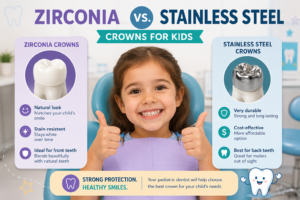
When decay covers a large part of the tooth, a filling may fail to hold. A crown covers the whole tooth and protects it until it falls out on its own. Pediatric dentists often use stainless steel or tooth-colored zirconia crowns.
Pulp Therapy
If decay reaches the nerve, your dentist may perform a pulpotomy, sometimes called a baby root canal. Your dentist removes the infected nerve tissue, then places a crown to seal the tooth.
Extraction and Space Maintainers
When your dentist can’t save a tooth, they remove it. A space maintainer then holds the gap open so the adult tooth can come in straight.
| Treatment | Best For | Numbing | What You’ll See |
|---|---|---|---|
| Fluoride varnish | White spots and early decay | No | No change |
| SDF | Small cavities, very young kids | No | Black stain on the decay |
| Filling | Small to medium cavities | Usually | Tooth-colored repair |
| Crown | Large cavities or after pulp therapy | Yes | Silver or white cap |
| Pulpotomy | Decay that reached the nerve | Yes | A crown follows |
| Extraction | Teeth your dentist can’t save | Yes | A space maintainer may follow |
Is It Worth Doing Fillings on Baby Teeth?
In most cases, yes. A filling costs less and takes less time than the treatments your child may need if the cavity grows.
Your dentist weighs a few factors before recommending cavity fillings:
- How deep the cavity is
- Which tooth has the cavity
- How soon the tooth should fall out
- Your child’s age and ability to sit for treatment
- Your child’s overall cavity risk
| Situation | Likely Recommendation |
|---|---|
| Cavity in a baby molar, child under 9 | Treat now |
| Cavity with pain or swelling | Treat now |
| Small cavity in a loose tooth | Monitor at each visit |
| White spot with no hole | Fluoride and monitor |
What to Do If Baby Teeth Have Cavities
- Book a visit soon. Early treatment keeps the fix small.
- Ask questions. Ask how deep the cavity is, which options fit your child, and what happens if you wait.
- Prepare your child. Use simple, positive words like “tooth cleaning” or “chasing the sugar bugs away.”
- Follow aftercare. Serve soft foods until the numbness wears off.
- Fix the cause. Look at snacks, drinks, and brushing habits so new cavities don’t form.
What to Expect at Your Child’s Filling Visit
At Glowing Smiles Pediatric Dentistry in Hallandale Beach, the team focuses on gentle treatment and fun visits. Here’s how a typical visit goes:
- Your dentist explains each step in kid-friendly words.
- Your dentist applies a numbing gel first, then gives a small dose of local anesthetic.
- Your dentist may offer laughing gas to help a nervous child relax.
- Your dentist removes the decay and places the filling.
Your child’s lip or cheek may feel numb for 1 to 3 hours. Watch your child closely so they don’t bite or chew on it.
How to Prevent Baby Teeth Cavities
These habits help stop the next cavity:
- Brush twice a day with fluoride toothpaste. Use a rice-sized smear for kids under 3 and a pea-sized amount for ages 3 to 6.
- Floss once your child’s teeth touch each other.
- Limit juice, soda, and sticky snacks.
- Put your child to bed without a bottle of milk or juice.
- Ask your dentist about sealants for the back teeth.
- Schedule a dental visit every 6 months, starting by your child’s first birthday.
The Bottom Line on Baby Teeth Cavities
Baby teeth cavities need attention because your child relies on those teeth to chew, speak, and guide adult teeth into place. Most cavities grow over time, and early treatment keeps the fix small and simple.
If you’ve noticed a dark spot or your child has tooth pain, schedule a visit with Glowing Smiles Pediatric Dentistry in Hallandale Beach, FL. Our team will check your child’s teeth and walk you through every option.